In the high-speed world of the Urban Nomad, fermentation is the ultimate rebellion. While your digital work happens in milliseconds, the microbes in your balcony corner operate on the scale of days and weeks. A balcony provides a unique “micro-terroir”—the specific yeast and temperature shifts of your neighborhood that infuse your ferments with a flavor found nowhere else.
In the tenth edition of Nomad Kitchen, we master Biological Time Management.
1. The Living Beverage: Balcony Kombucha
Kombucha thrives on airflow, making the balcony an ideal “brewery.”
- The Strategy: Use a continuous-brew glass vessel. The outdoor air circulation prevents the brew from becoming stagnant, while the natural day-night temperature fluctuations can add complexity to the carbonation.
- The Nomad Edge: Flavor your second fermentation with the herbs from your Micro-Garden (refer to Nomad Kitchen #06). A Rosemary-Grapefruit Kombucha is the ultimate brain-booster for a long afternoon of coding.
2. Sourdough: Capturing the Urban Wild
Your balcony is teeming with invisible, wild yeast.
- The Technique: Creating a “Starter” on the balcony is like taking a snapshot of your environment’s DNA. By leaving your flour-and-water mix exposed to the balcony air for short periods, you invite local microbes to take up residence. This isn’t just baking; it’s a culinary connection to your specific geographic coordinates.
3. Light & Temperature Control
The sun is the engine of life, but the enemy of fermentation.
- The Setup: Use a ventilated, dark-colored wooden crate (refer to Balcony Lab #06) to house your jars. This protects the light-sensitive SCOBY or starter from UV rays while allowing the cooling balcony breeze to prevent overheating. It’s a “Bio-Box” that maintains the perfect stability for your microbial team.
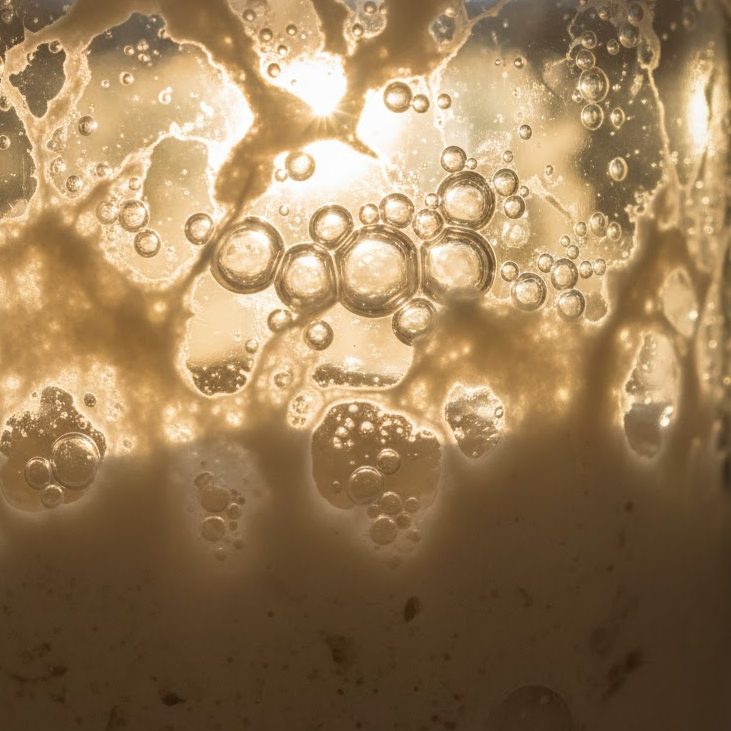
The Nomad Kitchen Experiment :
The “Wild Capture.” This week, start a simple 50/50 flour and water mixture. Keep it on your balcony for 5 days, stirring twice daily. Observe how the smell changes from “cereal” to “tangy fruit.” You are no longer just a consumer; you are a shepherd of a microscopic ecosystem.