For the Urban Nomad, freshness is often the first casualty of mobility. We rely on dried goods and pantry staples to save space. However, the secret to elevating a simple balcony meal from “survivalist” to “gourmet” lies in living enzymes. A handful of fresh herbs grown just 12 inches from your skillet changes everything. It’s not about farming; it’s about maintaining a Living Spice Rack.
In the sixth edition of Nomad Kitchen, we engineer the Vertical Herbal System.
1. The Survivalist Selection: High-ROI Herbs
Space is finite. Don’t waste it on low-impact plants.
- The Strategy: Focus on “High-ROI” (Return on Investment) herbs. Rosemary and Thyme are drought-tolerant and thrive in the harsh, windy micro-climate of a balcony. Basil provides immediate bulk for pestos, while Mint doubles as a stress-relieving botanical for your afternoon tea.
2. Smart Containers: Air-Pruning and Drainage
Traditional ceramic pots are heavy and prone to cracking.
- The Gear: Use Recycled Felt Grow-Bags. They are ultra-light, breathable, and promote “air-pruning” of roots, which leads to much denser, more flavorful herb growth. When it’s time to move, they fold flat—the ultimate nomad requirement.
3. Culinary Synergy: The Finishing Move
Fresh herbs aren’t just for cooking; they are for “layering.”
- The Technique: Don’t just cook the herbs in the dish. Save a few leaves to chop fresh at the very end. The volatile oils released by raw basil or cilantro as they hit a hot risotto (refer to Nomad Kitchen #05) provide an olfactory experience that dried spices can never replicate.
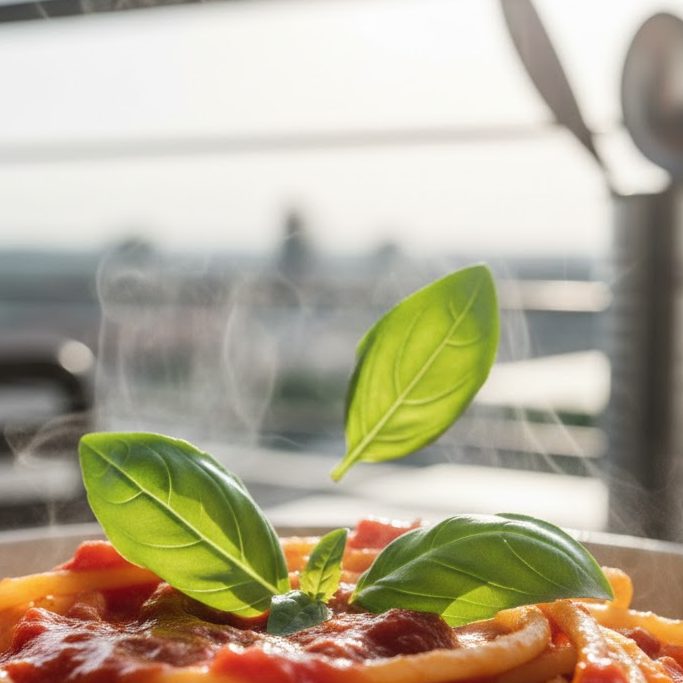
The Nomad Kitchen Experiment #06:
The “Aromatic Switch.” Cook the exact same simple pasta dish two nights in a row. On night one, use only dried herbs. On night two, use herbs harvested from your balcony 60 seconds before serving. Notice not just the taste, but how the act of “harvesting” resets your mental state after a long day of digital work.