For the Urban Nomad, the kitchen isn’t a room—it’s a capability. Traditional stoves are static and bulky, but the nomad’s kitchen must be modular. Whether you are searing a ribeye on your balcony or boiling water for a mountain-side ramen, your heat source defines your mobility. To kick off Nomad Kitchen, we are looking at the foundation of the portable culinary experience: the Precision Single Burner.
1. The Art of the Fold: Engineering the Flame
A nomad’s stove shouldn’t look like a piece of camping gear; it should look like a piece of kinetic art.
- The Gear: We prioritize burners that fold into a compact cylinder (like the Snow Peak Home & Camp Burner). When closed, it’s a sleek sculptural object; when open, it’s a stable, high-output platform capable of supporting professional-grade cookware.
2. BTUs and Wind Control
In an open-air “Balcony Lab,” wind is the enemy of heat.
- The Strategy: High BTU (British Thermal Unit) output is only half the battle. Look for burners with deep-set flames or integrated wind shields. This ensures that 100% of your energy goes into your cast iron, not into the city breeze.
3. Fuel Management: The CB-Canister Logic
Efficiency is about standardization.
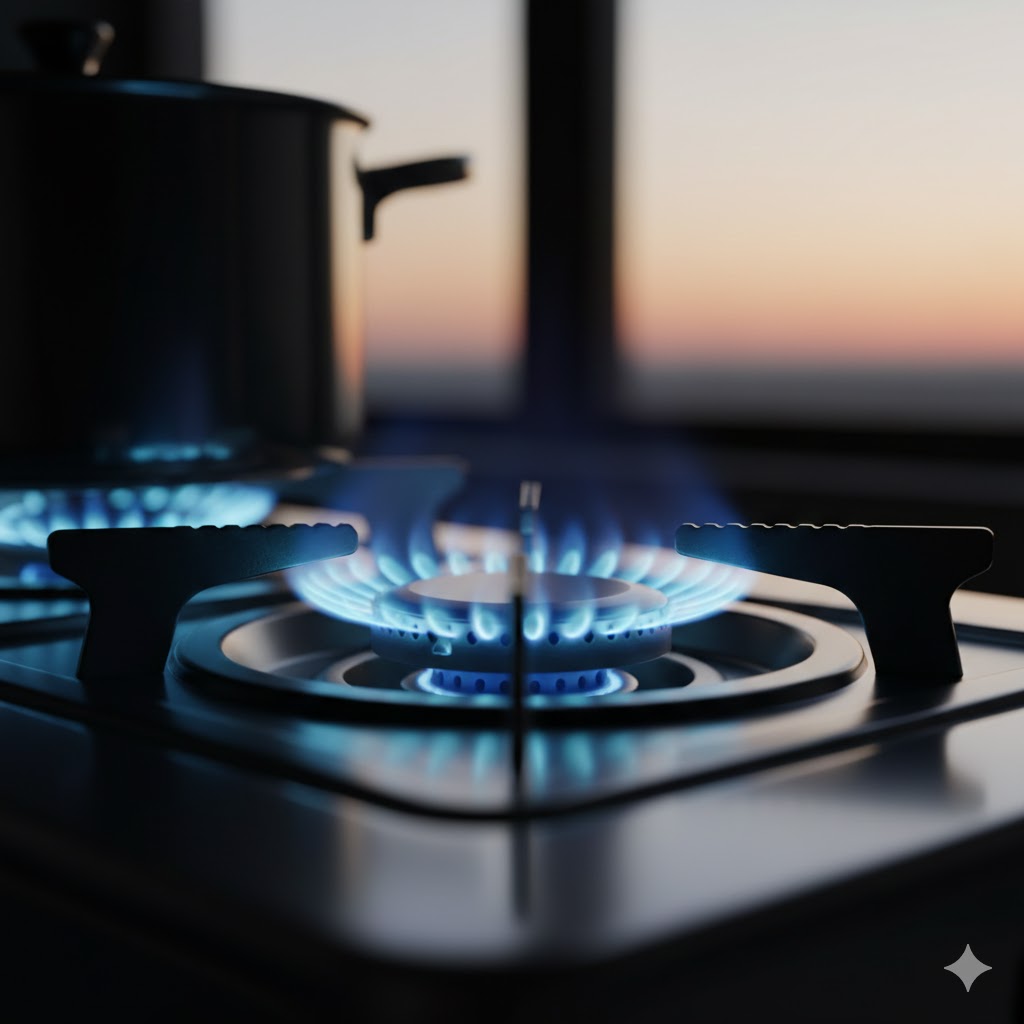
- The Choice: Most nomadic chefs prefer the CB (Cassette Gas) canister. They are cheap, available at any convenience store, and easy to store in your 60-Second Retreat crate (refer to Balcony Lab #06).
The Nomad Kitchen Experiment #01:
This weekend, skip the delivery app. Set up your burner on the balcony, grab a high-quality cast iron pan, and cook a single, perfect protein. Notice how the open air changes the sensory experience of cooking—the smells don’t linger in your curtains, and the city becomes your dining hall.