For the Urban Nomad, time is the most precious resource. We don’t always have the bandwidth to manage a sizzling pan while attending a video call. This is where Sous-vide (Under Vacuum) becomes a game-changer. By using a precision immersion circulator powered by your Energy Hub (refer to #11), you can achieve “edge-to-edge” perfection in your proteins with zero active supervision. It is the ultimate background process for your culinary operating system.
In the twelfth edition of Nomad Kitchen, we explore Thermal Precision.
1. The Physics of Tenderness
Traditional high-heat cooking is a game of seconds; one distraction and your steak is ruined.
- The Advantage: Sous-vide holds water at a constant, precise temperature (e.g., 54°C for medium-rare). Because the heat is perfectly distributed, it’s impossible to overcook. You can leave your protein in the bath for 2 hours or 4 hours; it will wait for you to finish your deep-work session.
2. Space Efficiency: The Transparent Tank
You don’t need a bulky slow-cooker.
- The Setup: A compact immersion circulator can be attached to any heat-resistant container—a polycarbonate tank or even a large stockpot. When the meal is done, the circulator is no larger than a rolling pin, fitting perfectly into your 60-Second Retreat crate. It’s professional-grade equipment that respects your 1-square-meter footprint.

3. The Final Interaction: The Tactical Sear
Sous-vide handles the internal texture, but the flavor comes from the “Maillard Reaction.”
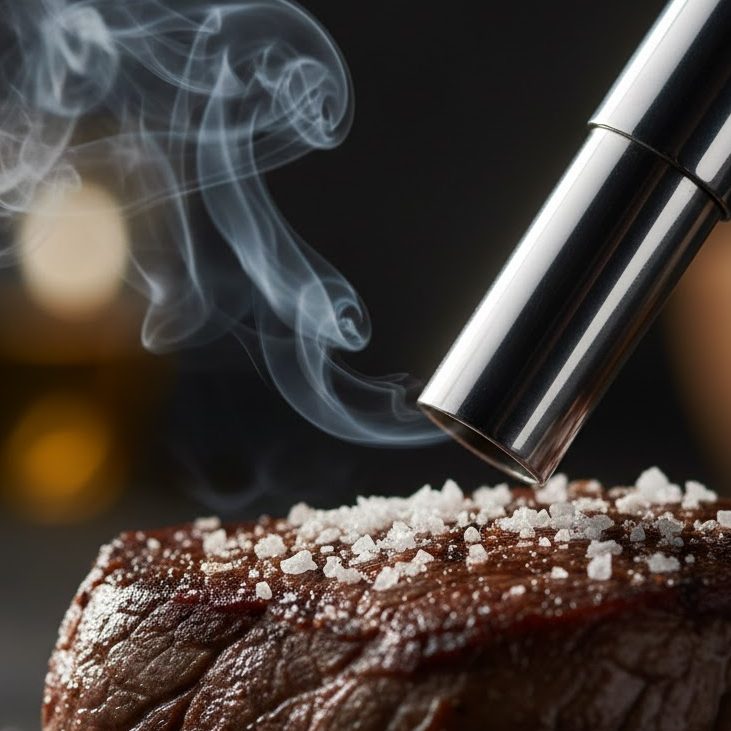
- The Move: Once the timer hits, remove the protein from its vacuum bag, pat it dry, and give it a 60-second “Hard Sear” in your pre-heated cast iron skillet (refer to #02). The contrast between the scientifically tender interior and the fire-kissed crust is the pinnacle of the Nomad Kitchen experience.
The Nomad Kitchen Experiment :
The “Dual-Track Workday.” Start a 48-hour slow-cooked short rib or a 2-hour chicken breast in your balcony water bath at the start of your shift. Work through your tasks as usual. When the sunset hits, perform the final sear. Notice how the lack of “cooking stress” makes the final meal taste like a victory.