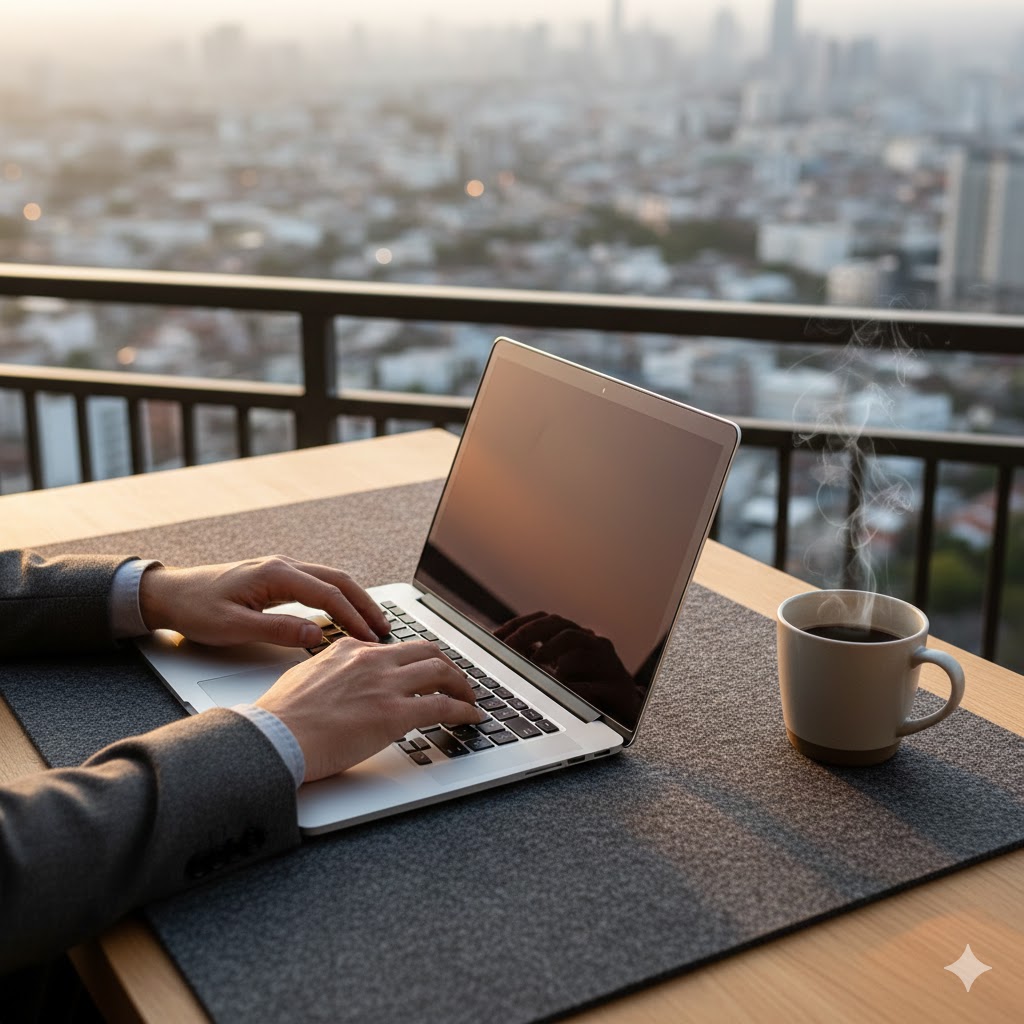
To the Urban Nomad, a balcony without a strong connection is just a porch. The moment your Zoom call freezes or the neighbor’s leaf blower kicks in, your productivity sanctuary collapses. True “Lab” status is achieved when you can replicate the high-speed, quiet environment of a premium coworking space in the open air.
In the seventh experiment of The Balcony Lab, we’re optimizing your Digital and Auditory Perimeter.
1. Defeating the “Glass Barrier”: Wi-Fi Optimization
Standard double-pane balcony doors are excellent at keeping out the cold, but they are also excellent at blocking Wi-Fi signals.
- The Mesh Solution: If your router is in the living room, place a Mesh node as close to the balcony glass as possible.
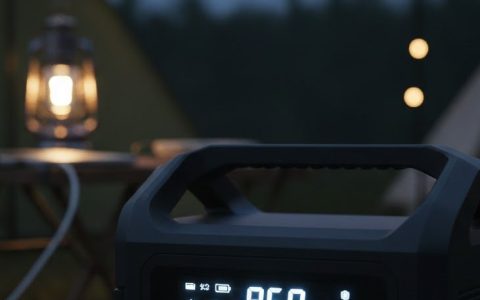
- The Portable Extender: For a more “nomadic” setup, use a USB-powered Wi-Fi extender plugged into your power bank (refer to Essential Gear #07). This creates a dedicated “hotspot bubble” just for your balcony gear.
2. Active vs. Passive Noise Isolation
Urban silence is a luxury you have to engineer.
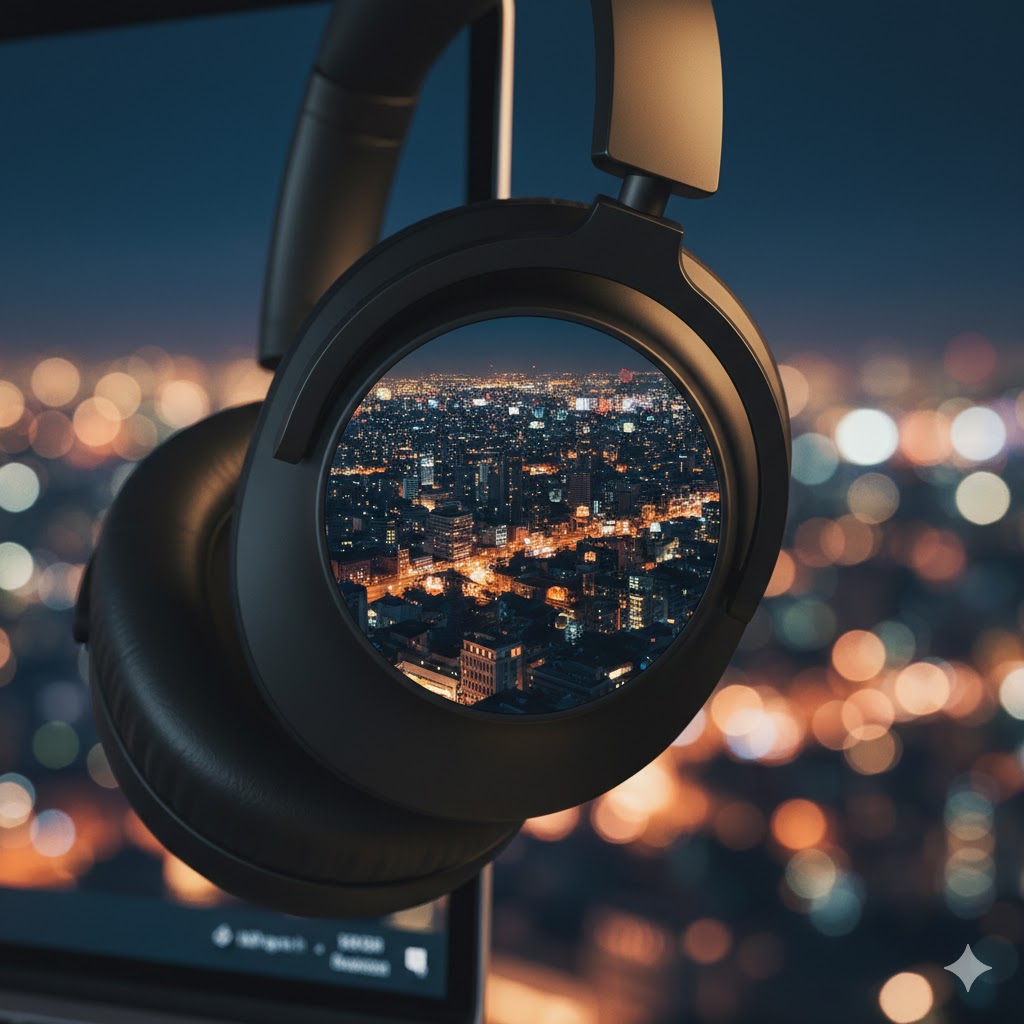
- The Hardware: High-end Active Noise Cancelling (ANC) headphones are mandatory. They don’t just block the street traffic; they create a predictable “sonic room” that tells your brain it’s time to work.
- The Software: Use noise-masking apps or “Brown Noise” to drown out the irregular sounds of the city (sirens, shouting) that ANC sometimes struggles with.
3. The Microphone Shield: Professionalism Outdoors
If you have to take meetings outside, the wind is your enemy.
- The “Deadcat” Hack: If you use a dedicated mic, a small foam or faux-fur “windjammer” is essential. Even a high-quality headset benefits from “Noise Suppression” software (like Krisp) to ensure your colleagues hear your voice, not the wind hitting your balcony railing.
The Lab Experiment for This Week:
Run a speed test. First, test your Wi-Fi inside, then outside on your balcony. If the drop is more than 30%, it’s time to reposition your router or invest in an extender. Your flow state depends on those megabits.