
For the Urban Nomad, “freedom” can sometimes look like excessive consumption: long-haul flights, single-use plastics in foreign cafes, and high-energy cooling in tropical bases. However, true autonomy includes the responsibility of Stewardship. To be a “Citizen of the World,” you must ensure that your presence adds more value to an ecosystem than it extracts. Sustainability is not a sacrifice; it is an optimization of your Nomadic Efficiency.
In the thirteenth guide of Lifestyle & Guides, we master Ecological Sovereignty.
1. The “Slow Travel” Anchor
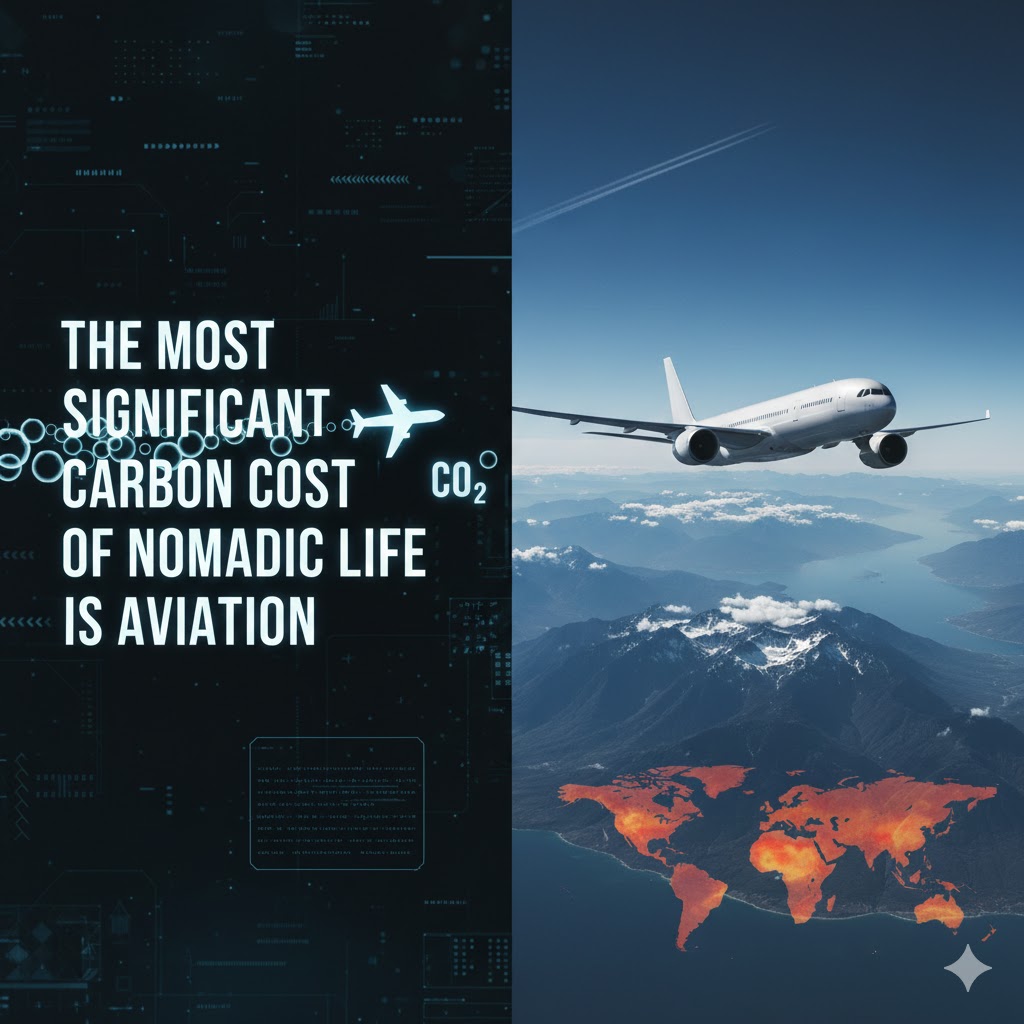
The most significant carbon cost of nomadic life is aviation.
- The Strategy: Implement the “90-Day Rule.” Instead of hopping cities every two weeks, commit to a minimum of 90 days per base. This “Slow Travel” philosophy drastically reduces your carbon footprint, lowers your per-diem costs, and allows you to integrate deeply into the Local Communities (#06). You move like a season, not like a tourist.
2. The Low-Impact Gear Loop
Every item in your 30L Shell (#02) should be selected for its “Lifespan-to-Weight” ratio.
- The Protocol: Prioritize Circular Gear. Choose brands that offer lifetime repairs (like Patagonia or Peak Design). Avoid the “cheap-and-replace” cycle. On your balcony, use the Waterless Cleaning Protocols (#09) we discussed in the Kitchen series—minimizing resource waste is a habit that translates from your 1-square-meter lab to the entire planet.
3. Hyper-Local Offsetting
Generic carbon credits are often opaque. Instead, “Offset where you Live.”
- The Setup: For every flight or high-energy month, contribute to a Local Environmental Project in your current base. Whether it’s supporting an urban reforestation project in Berlin or a reef restoration initiative in Bali, local offsetting ensures your “Rent” to the planet is paid directly into the soil you are currently standing on.
The “Zero-Waste Transit Day.” On your next move between bases, challenge yourself to produce zero non-recyclable waste. Carry your own Titanium Cup , use digital boarding passes exclusively, and reject all single-use plastics during the journey. Observe how this heightened awareness of “Inputs and Outputs” makes you a more disciplined, intentional nomad.