As an Urban Nomad, your food doesn’t just nourish your body—it fuels your digital persona. On a balcony, you have access to the world’s best lighting studio: the shifting natural sun. To master the presentation, you don’t need a cabinet full of fine china. You need “Hero Vessels”—multi-functional pieces that bridge the gap between rugged survival gear and high-end design objects.
In the fourteenth edition of Nomad Kitchen, we master the Grammar of Visual Dining.
1. The “Hero Vessel” Strategy
Space dictates that your plate must be your prep bowl, and your prep bowl must be your photo prop.
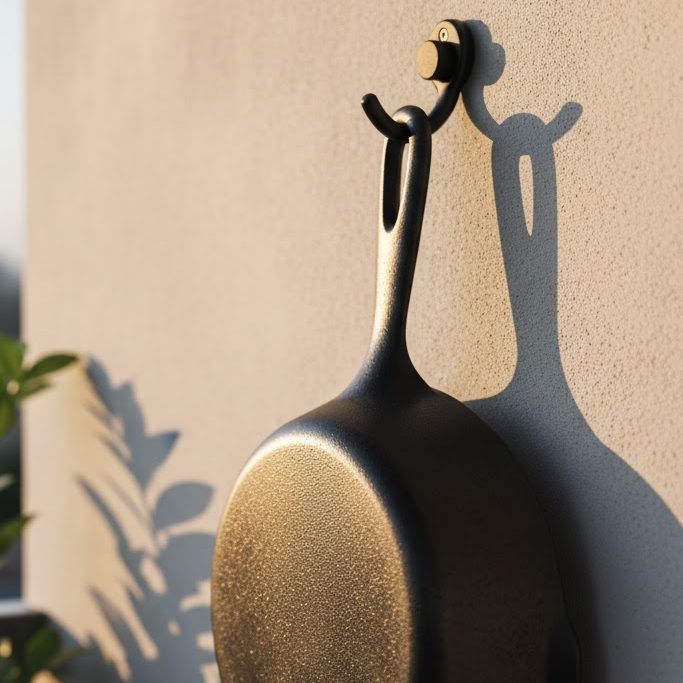
- The Gear: Choose matte-finished Titanium or Anodized Aluminum in neutral tones (charcoal, sand, or olive). These materials don’t reflect harsh glare into your camera lens and provide a sophisticated, industrial backdrop that makes the natural colors of your Micro-Garden herbs (#06) pop.
2. Chiaroscuro: Mastering the Shadow Play
The harsh midday sun is usually a photographer’s enemy, but for the nomad, it’s a tool for “Chiaroscuro” (the contrast of light and dark).
- The Technique: Position your dish where the balcony railing creates a pattern of shadows. This adds architectural depth to the photo, signaling to your audience that this meal exists in a specific, urban outdoor context. It’s not just a meal; it’s a “scene.”
3. The “Rule of Thirds” in Gear Placement
Clutter is the enemy of the nomad aesthetic.
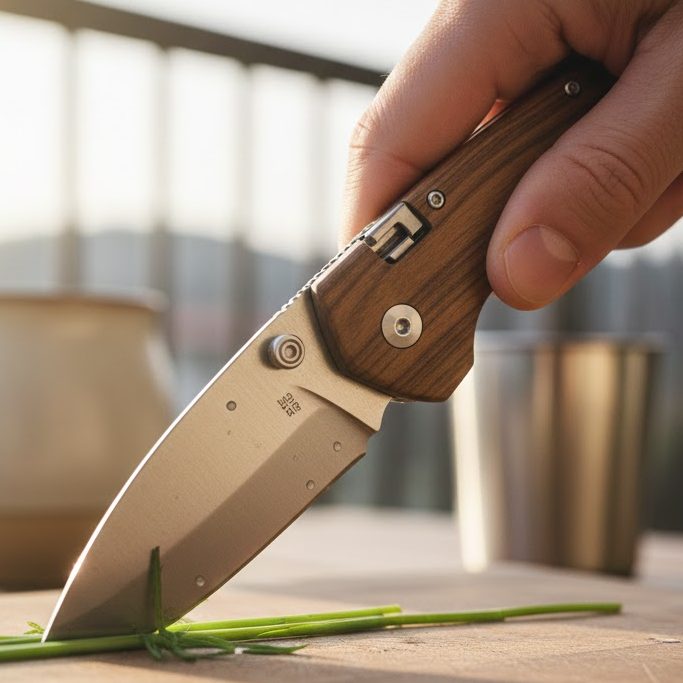
- The Layout: Use your tools as compositional elements. A single folding knife (#03) placed at a 30-degree angle or a titanium cup (#08) positioned in the blurred background creates a sense of “organized life.” It tells the story of the process, not just the result.
The Nomad Kitchen Experiment :
The “No-Filter Photo Session.” Prepare a meal, and before the first bite, spend 120 seconds moving the plate around your balcony to find the “Power Spot” where light and shadow align. Take one photo with zero filters. If the gear and the light are right, the truth of the ingredient will speak for itself.